1. Introduction
t the present, the metal forming industrials have high technology competition, not only the modernized machinery but also the manufacturing process which reduced the production cost in various ways. The forging process was the fast work pieces production and had accurate size when compared with the metal molding process. For this reason were necessary to studied for searching several variables such as choosing the kind of materials which were suitable with hot forming process, forging temperature, stain, strain rate which directly affected the end product quality [1][2].Researches of aluminum alloys indicate a great correlation between these parameters and structure quality from which mechanical properties depend. During deformation of aluminium alloys at elevated temperature, the intensive processes of structure restoration are preceded. In the majority of studies it is ascertained that the main process of structure restoration in aluminium alloy is dynamic recovery [3].
2. II.
3. Experiments
The experiment were carried out on Al-Si-Mg Alloy (6061 alloy) whose main chemical composition are give in table 1. Cylindrical samples with size of d10 mm x 15 mm were machined from commercially extrusion billet. A computer -controlled, servo -hydraulic Gleeble 3500 Machine was used for compression testing. It can be programmed to simulate both thermal and mechanical industrial process variable for a wide range of hot deformation condition. The specimens were heated to the deformation temperature at heating rate of 5 °c/s and held at the temperature for 120 s by thermo coupled-feedback-controlled AC Current. The isothermal hot compression tests were performed at 350, 400, 450 °c Temperature and strain rates of 0.2, and 20 s¯¹. The experimental stress-stain curves under various deformation conditions were obtained. The deformed specimens were water quenched after compression to maintain the microstructure for further observation. Following process cycle were carried for total of 9 samples in order to determine the effect to deformation temperature on material and properties which can be achieved if they are forged for particular strain rate which is being maintained.
4. Results and Discussion
5. a) Stress -Strain Curve
A serious typical true stress-strain curves obtained during hot compression of 6061 alloys at strain rate of 0.2,&20 s¯¹ and deformation temperature of 350, 450°c are show in Fig. 2&3.It can be seen that the true stress -true strain curve exhibit a peak stress at a certain strain, followed by dynamic flow softening until the end of compression. The flow softening is probably subjected to the dynamic recovery and recrystallization during the hot deformation of precipitation hardening alumimum alloys [4].Comparing the curves with one another, it is found that,for a specific strain rate, the flow stress deceases markedly with temperature deceasing. Further, the temperature changes have a significant effect on the dynamic softening rate. The strain corresponding to the peak stress increases with increasing strain rate [5].
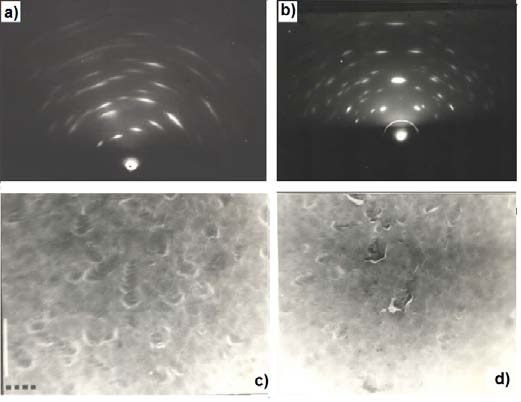
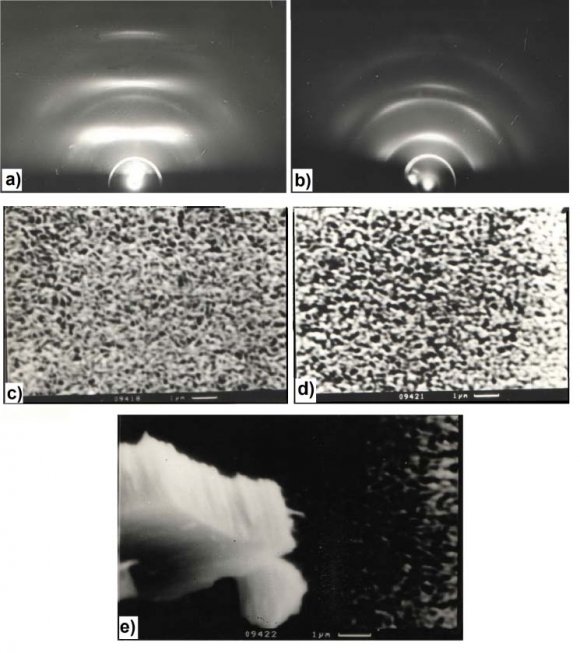
It can be seen clearly from fig. 2 that the strainstress curve of 6061 alloy deformed at 350°c is typically characterized by a rise to a plateau followed by a constant flow stress, which is the feature of curves for DRV. This indicates that the main softening mechanism of 6061 alloy in this condition is DRV. However, the stress -strain curves of 6061 alloy deformed at 450°c exhibits a single and smooth peak, followed by a slow but obvious softening stage, which is quite different from that deformed at 350°c. It is reasonable to presume that the softening mechanism in this condition may be DRX. Table no.2 shows that as the strain rate incenses the flow stress also increases and as a temperature increases flow stress decreases at constant strain rate. After preparing stress-stain diagram next thing is microstructure evolution [6].Fig. 4 of the microstructure show that at low temperature there is a Precipitation taking place which directly increases the flow stress [7]. The dark region in the microstructure show the Mg2Si Precipitate and light grey colour shows AlFeSi. Due to low temperature the size of the precipitate is Bigger. There is a sub grain formation with a dissolute precipitate inside due to which hardening taking places at 350°c temperature .
6. Dynamic Recovery
For the conformation of dynamic recovery work hardening exponent is calculated and then double differential of that is take to find out that there is DRX orDRV[9-10].The change of slope ?=d ? / d? of stressstrain curve with stress can be a good indication of microstructure change taking place in material. The curve is generated for 350°c, 450°c for 0.2s -1 strain rate. For the above sample the strain hardening curve is generated and it was observed that for strain rate of 0.2 s -1 there was no DRX taking place but recovery and hardening was initiated with peak stress. The ? graph showing that there is no such smooth DRX formation is there hence the dark line and dotted line in the graph are just collapse with each other at various point. This is the indication of DRV. Critical stress =B/3A ?c = 79.429
At a temp of 350 c & strain rate of 0.2s -1 the critical stress occur is 79 Mpa which remain almost constant. Which show that a dynamic softening is replaces by work hardening.
7. Mg2si
Mg2Si AlFeSi V.
8. Conclusions
a) The true compressive stress -strain curves of 6061 aluminum alloy deformed at different temperature and strain rates were obtained. b) The result shows that temperature changes have a significant effect on the dynamic softening rate. c) At 350° c there is typical rise to a plateau followed by a constant flow stress, which is the feature of curve for DRV. d) At 450°c exhibit some peak followed by a slow but obvious softening stage. It is reasonable to presume that the softening mechanism in this condition may be DRX. e) At 350 °c a horizontal line is obtained which show that precipitation is taking places. f) At 450 °c dynamic softening is balances by work hardening. g) The true stress & stain graph show that at low temperature and low stain rate flow stress are low. But as the stain rate is increases and temperature is a decrease the flow stress increases. h) In contrast, for a temperature of 450° c the low stress generally increases with the strain rate due to the increases of dislocation density & dislocation multiplication rate.

| Mn | Mg | Si | Cu | Fe | Zn | Cr |
| 0.06 | 0.97 | 0.64 | 0.39 | 0.15 | 0.08 | 0.04 |
| Temp °c | Strain rate s¯¹ Peak Stress | |
| (MPA) | ||
| 350 | 0.2 | 79 |
| 450 | 0.2 | 27 |
| 350 | 2 | 114 |
| 450 | 2 | 44 |
| No. | Temp | Hardness (HV) | |||
| 0°c | Core | Edge | |||
| 1 | 350 | 71.1 | 70.1 | 68.1 | 70.2 |
| 3 | 450 | 49.9 | 50.9 | 49.8 | 50.1 |