1. Introduction
air was one of the external barometers of internal body conditions. It was an important part of the human body. Various synthetic compounds, chemicals, dyes, and their derivatives have been proved to cause harmful aftermath. Nowadays, people are having an awareness of their effects on hairs skin and eyes. Due to these reasons, the community was attracted to herbal products due to their inexpensive nature and negligible side-effects. Herbal cosmetics were denoted as products formulated using various permissible cosmetic ingredients to form the base in which one (or) more herbal ingredients were used to provide accurate benefits. Nowadays, the usefulness of herbs in the cosmeceutical production had extensively increased, and there was a demand for herbal cosmetics. As far as the herbal shampoos were concerned on the nature of the ingredients, they may be simple shampoo, antiseptic (or) antidandruff shampoo and nutritional shampoo containing vitamin, amino acids, proteins hydrolysate. The selection of active components for hair care were based on the ability of the ingredients to prevent skin damage as well as to improve the quality of skin by cleansing, nourishing and protecting the skin. In this study, the formulation and evaluation of herbal shampoo powder are reported.
The scope of the present research work was to develop an herbal shampoo powder with activated charcoal which clears sebum, dirt, dandruff, promotes hair growth, and strengthens hair. Moreover, it also acts as a conditioning agent. This herbal shampoo powder performs all these actions without affecting or damaging hair.
2. II.
3. Methods and Materials a) Sample collection
Different parts of the plant are selected to study its hair care property. The plants used are Sikakai, Reetha, Aavaram Poo, Thulasi, Nannari, VettiVerr, Lemon Skin, Rose Flower, Kuppaimeni, Amala, Hibiscus, Mint, and Meethi. All the required powders were collected from the local herbal drug store market. The raw materials collected were given with their uses below.
4. Shikakai (Accaciaconcina)
5. Formulation of Herbal Shampoo Powder
These powders were accurately weighed, passed through sieve No. 100 and then mixed in their ascending order of quantities with continuous trituration and stored in airtight containers until it was used for further studies. Three batches of the herbal shampoo powder formulations (1-3) are prepared, labeled and stored in a well-closed container and used for further studies. The preparation formulas were given in Table 1. IV.
6. Evaluation of Herbal Shampoo a) Organoleptic evaluation Color
The color of the herbal shampoo was observed and noted.
7. Odor
The odor of the shampoo was observed.
8. Texture
The texture of the shampoo was observed.
b) Physiochemical Evaluation pH 5% shampoo solution was taken and the pH was determined using a pH meter at room temperature. Active matter 2.2 gm of the sample was weighed accurately, and it is made up to 250 ml by addition of distilled water in a standard flask. It was shaken well and allowed to dissolve for some time. After a few minutes 10 ml of the sample was pipetted out. Standardized benzethonium chloride solution was filled in the burette. 0.05 gram of methylene blue, 50 grams of sodium sulfate and 68 ml of concentrated sulphuric acid was dissolved in water; methylene blue solution was prepared. This methylene blue solution was used as an indicator. This methylene blue solution was added to the pipetted out sample. 0.5 ml of benzethonium chloride solution was added slowly from the burette. The cylinder was stoppered and shaken well after each addition. The phases were allowed to separate. Initially, the chloroform layer was colored blue or greenish blue. Towards the end, the color started to migrate to the aqueous layer. The color intensity in both the phases were the same when viewed under standard conditions of light was noted.
9. where, 342-Molecular mass of sodium alkyl benzene sulphonate taken for calculations V-Volume in ml of benzethonium chloride solution added M-Molarity of benzethonium chloride solution m-Mass in g of the sample taken Non-volatile alcohol-soluble matter
2 gm of the sample was taken, and 50 ml of 95 % ethanol was added to it. The sample was soaked in the solution for 5 minutes. The mixture was then heated in a water bath for 15 minutes. After some time when all the alcohol-soluble matter was dissolved, the solution was filtered to remove the remaining insoluble matter. The empty weight of the crucible and along with the residue was observed. This mixture was allowed to dry for 1 to 2 hours in an autoclave at 95 o C. The final weight was recorded after drying. It was calculated as
10. where, x -Weight of the sample y -the initial weight of the empty crucible z -the final weight of the crucible with residue Foam Height
2 gm of the sample was weighed accurately, and mixed in 100 ml of distilled water. The mixture was taken in a 500 ml graduated cylinder, and it was shaken for 50 times. The test was carried at room temperature. The foam was formed due to the foaming ability, and its height was noted.
11. Foam Stability
In Water Base 2 gm of the sample was weighed accurately, and mixed in 100 ml of distilled water. The mixture was taken in a 500 ml graduated cylinder, and it was shaken for 50 times. The test was carried at room temperature. Foam was formed due to the foaming ability. The formed foam retention time was noted.
In Ethanol Base 0.3 gm of the sample was weighed. The sample was added to an ethanol solution (99.9% ethanol 5 ml, and water 25 ml). The mixture was taken in a 100 ml graduated cylinder, and it was shaken for 20 times. Foam was produced. The foam retention time was noted.
12. Dirt Dispersion
A pinch of shampoo was taken in a large test tube. 10 ml of distilled water, and one drop of India Ink (blue ink) was added to the mixture. The test tube was stoppered and shaken for ten times. The amount of ink in the foam was estimated as (None, Light, Moderate, or Heavy), and recorded.
13. Microbiological Assay
The yeast and mold was cultured for five days. The samples with various carbon proportions were added to these cultures, and their reduction count was noted after two days. The base count is 12,00,000 CFU/gm.
14. Global Journal of Researches in Engineering
15. Percentage of non-volatile alcohol soluble matter = ( X -Y × 100) ÷ z
The anionic active matter as sodium alkyl benzene sulphonate was calculated as
16. Critical Micelle Concentration
The sample was weighed, and taken in five different proportions. 50 ml of distilled water was mixed in each. This mixture was taken in a measuring cylinder, and was shaken 20 times. Foam was produced in various heights for various concentrations. These heights were measured and the graph was plotted for concentration vs. foam height. Initially, for increment in concentration, the foam height was also increasing. After a particular volume of solution, the foam height was found to be decreasing. The maximum foam height achievable was found from the graph. The corresponding concentration was the Critical Micelle Concentration (CMC) for the sample.
V.
17. Results
18. a) Organoleptic evaluation
The outcome of visual inspection for all the shampoo powders were observed and evaluated for color, odor, taste, and in terms of their appearance, flow property, and texture. They showed a distinct change in color. The results were reported in Table 2.
19. b) Physiochemical evaluation pH
The composition of activated carbon did not alter the pH of the shampoo. pH was noted as 5.5 which lies within the required standards of IS 7884:2004. The result was reported in Table 3.
20. c) Active matter
The composition of activated carbon did not alter the parameter of the shampoo. 9.6 g/100 g was the noted value which lies within the required standards of IS 4955:2001. The result was reported in Table 4.
21. d) Non-volatile alcohol-soluble matter
The composition of activated carbon did not alter the non-volatile alcohol-soluble matter of the shampoo. 72.41 g/100g is the noted value which lies within the required standards of IS 7884:2004. The result was reported in Table 5.
22. e) Foam Height
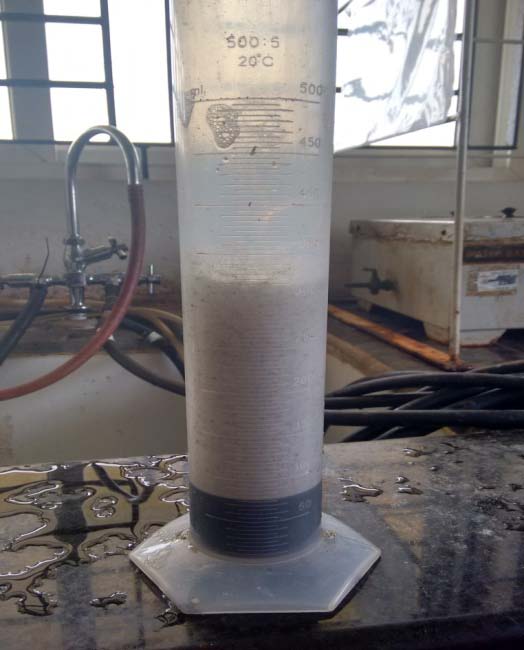
The composition of activated carbon did not alter the foam height of the shampoo. 250 mm is the noted height which lies within the required standards of IS 7884:2004. The result was reported in Table 6 and Figure 1.
The composition of activated carbon did not alter the foam stability of the shampoo. Thirty minutes was the noted time which lies within the required standards.
23. In Ethanol Base
Twenty-five minutes was the noted time. The foam which was stable in ethanol base can be used in soil remediation. Here the foam produced, irrespective of carbon content was stable on diluted ethanol base. So it could be used in the process of soil remediation.
24. Dirt Dispersion
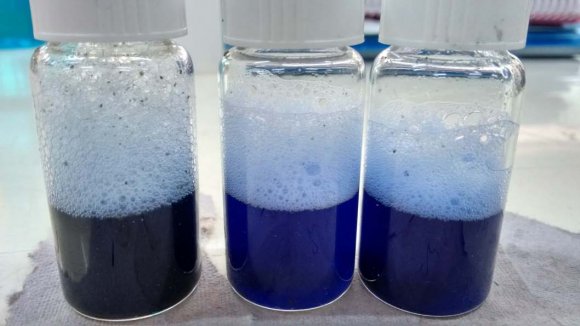
The dirt dispersion ability increased as the concentration of the charcoal increased in the shampoo. It was shown in Figure 2.
25. Microbiological Assay
The reduction count of microbes was found to be high, as the concentration of the activated charcoal in the shampoo was increased. The result was reported in Table 7.
26. Critical Micelle Concentration
The CMC was studied and a graph was plotted. The result was shown in figure 3.
27. Conclusion
Activated carbon was applied in various fields due to its adsorption and dirt removing capacity. In this paper usage of activated carbon in effectively removing dandruff and dirt is discussed. Based on the results obtained, it could be interpreted that usage of activated carbon in shampoo in various compositions yield better results in dandruff treatment and dirt dispersion. Since it was used along with herbs, the shampoo does not have any side effects.
| Studies on the Addition of Activated Charcoal in Herbal Shampoo | |||||
| Year 2019 | |||||
| S. No | Constituents | Sample 1 (gm) | Sample 2 (gm) | Sample 3 (gm) | |
| 1 | Shikakai (Accaciaconcina) | 16.67 | 16.67 | 16.67 | |
| 2 | Amla (Emblicaofficinalis) | 3.33 | 3.33 | 3.33 | |
| 3 | Mint (Menthapiperita) | 3.33 | 3.33 | 3.33 | |
| ( D D D D ) C | 4 | Hibiscus( Hibiscus rosa-sinensis) | 2.5 | 2.5 | 2.5 |
| 5 | Reetha(Sapindusdetergens) | 6 | 6 | 6 | |
| 6 | Avaram Poo (Sennaauriculata) | 3.33 | 3.33 | 3.33 | |
| 7 | VettiVer (Chrysopogonzizanioides) | 3.33 | 3.33 | 3.33 | |
| 8 | Lemon Skin (Citric acid) | 1.34 | 1.34 | 1.34 | |
| 9 | Fenugreek Leaves (Trigonellafoenum-graecum) | 3.33 | 3.33 | 3.33 | |
| 10 | KuppaiMeni (Acalyphaindica) | 3.33 | 3.33 | 3.33 | |
| 11 | Thulasi (Ocimumtenuiflorum) | 3.33 | 3.33 | 3.33 | |
| 12 | Rose Petals (Rosaceae) | 1.34 | 1.34 | 1.34 | |
| 13 | Nannari (Hemidesmusindicus) | 1.34 | 1.34 | 1.34 | |
| 14 | Activated Charcoal | 3.5 | 2.5 | 1.5 | |
| © 2019 Global Journals | |||||
| Evaluation Parameters | Sample 1 | Sample 2 | Sample 3 |
| Colour | Greenish Grey | Greenish Grey | Greenish Grey |
| Odor | Slight | Slight | Slight |
| Texture | Fine | Fine | Fine |
| SAMPLE NO. | RESULT | UNIT |
| Herbal shampoo 1 | 5.50 | - |
| Herbal shampoo 2 | 5.52 | - |
| Herbal shampoo 3 | 5.56 | - |
| Sample No. | Result | Unit |
| Herbal shampoo 1 | 9.65 | gm/100 gm |
| Herbal shampoo 2 | 9.67 | gm/100 gm |
| Herbal shampoo 3 | 10.50 | gm/100 gm |
| Herbal shampoo 1 | 73.75 | gm/100 gm |
| Herbal shampoo 2 | 72.11 | gm/100 gm |
| Herbal shampoo 3 | 71.37 | gm/100 gm |
| Herbal shampoo 1 | 250 | mm |
| Herbal shampoo 2 | 250 | mm |
| Herbal shampoo 3 | 250 | mm |
| Herbal shampoo 1 | 900000 | cfu/g |
| Herbal shampoo 2 | 600000 | cfu/g |
| Herbal shampoo 3 | 200000 | cfu/g |