1. Introduction
inserted in another contents. Digital image watermarking supports image, audio or video file as watermark. At present data security, copyright protection, imperceptibility and authenticity have become indispensable issues in data hiding. Watermarking indemnifies all these issues in a strategic way. Watermarking technique can be implemented in two domains: spatial domain and frequency domain. In spatial domain, without using any transformation, the watermark can be embedded into host image which is of less complexity and simpler but it's not that much robust against attacks. Frequency domain needs some transformation [1-2] before embedding the watermark image into host. Though it is complex than spatial domain, it shows more robustness against attacks. According to type of document, watermarking is of text, image, audio or video types. Based on several applications it is of three types as fragile, semi-fragile and robust. Visible and invisible watermarks are types of fragile water marking. Tamper detection is a prime theme for fragile watermarking. Robust watermarking is an algorithm that is dynamic and rigid even after adding noise.
Many embedding techniques have been proposed earlier based on Local Binary Pattern, Integer Wavelet Transform or Tent Map. Bhardwaj et al. [1] has proposed a lifting wavelet transform based robust watermarking scheme that uses singular value decomposition for obtaining singular values of watermark image. Makbol et al. [2] has discussed a robust watermarking scheme that based on IWT and SVD that performs authentication and helps security issues. Lazarov et al. [3] proposed an algorithm that uses chaotic maps for embedding; Arnold's cat map and Tent map are applied to the host and watermark image respectively. based recoverable fragile watermarking technique that uses 3 × 3 size blocks for LBP operator. Zhang et al. [5] proposed a blind fragile watermarking scheme based on LBP, Arnold transform and Logistic map.
technique in which IWT and singular value decomposition (SVD) based scheme was discussed to ensure security and robustness. On the host image, IWT was applied first and then, on this transformed image, SVD was applied because the properties of SVD and IWT gave higher level of robustness. Wenyin et al. [7] proposed a semi-fragile multi-level image watermarking scheme based on LBP operators that was performed in spatial domain. A digital dual watermarking using SVD and redundant discrete wavelet transform (RDWT) has been proposed by Gaur et al. [8] which has a primary watermark and a scrambled watermark using Arnold cat map. Saiyyad at el. [9] proposed a dual watermarking process with hash function and the security purpose of AES ciphered watermarking and also tampers detection. It uses unique identification code as first watermark and for second water mark; hash code is generated from host image. All these papers have proposed watermarking scheme using Local Binary Pattern, Integer Wavelet Transform or Tent Map individually. But we wanted to combine these three themes into one method to provide more robustness and stiffness of technique.
proposed two watermarking schemes using SVD and DWT-SVD technique.
watermarking scheme has been discussed that is the combination of Tent map, IWT and LBP. Chapter 2 describes the basic background of chaotic mapping and image transformation. Chapter 3 presents the procedure of the proposed watermarking scheme. Chapter 4 shows the experimental result analysis. Chapter 5 concludes the paper. Tent map is an image scrambling or mapping system that generates a fixed number of chaotic bit sequences. Mathematically, Tent map is the real-valued function and the sequence x n using this map is produced by iterating x [12]. In this scheme, the sequence that is produced by this map is rounded up to binary numbers and reshaped to a matrix of same size of watermark.
2. II.
3. Background
(1)
4. b) Local Binary Pattern
Local Binary Pattern (LBP) is a very systematic texture operator that operates with the pixel of an image, sets a threshold level for each pixel and shows the result as binary numbers. For 3×3 mask, the binary numbers are generated by following formula [4]. In our scheme, instead of 3×3 mask, we applied 5×5 mask.
?? ?? = ? 1, ?? ?? ? ?? ?? 0, ?? ?? < ?? ?? (2) c) Integer Wavelet TransformInteger wavelet transform is an integer to integer wavelet transformation technique that is efficient for lossless data compression and also faster in comparison with continuous wavelet transform and discrete wavelet transform. IWT provides higher level of robustness because of the structure of Lifting scheme [6]. Like DWT, 4 bands are generated (????1, ????1, ????1, ????1) in IWT.
In lifting method, there are three steps to implement IWT. These are-split, predict and update [13][14]. Split refers that, original signal is folded into odd (????) and even (????) components. On predictor, the odd sequence is being predicted by even sequence. Neweven samples are produced that are based on updater.
If the value is µ = 2, the function ð??"ð??" µ will divide to get again the interval [0,1].
the unit interval into two, first stretching the interval
? ? = ð??" µ (? ? ) ={ µ ? ? for ? ? < .5 µ(1 ? ? ? )for .5 ? ? ? III.
5. Proposed Scheme a) Embedding Procedure
A gray-scale image of size (?? × ??) is taken as the host image. Then IWT is applied on this image for find LL band (????1 band). After this, local binary pattern [7] is applied for each (5 × 5) mask of ????1 band to form binary matrix .The whole embedding procedure is shown in Fig. 1 and is illustrated in algorithm as follows: In this paper, a robust and dual level In this section, we will discuss about the extraction procedure of proposed method. In the extraction part, two watermark images are extracted from the watermarked image. First two scrambled watermarks ??1&??2 are generated, then performing the XOR operation with tent map, the extracted watermarks ??1 & ??2 are again generated. The whole procedure is shown in Fig. 2 and also illustrated in the following algorithm:
Whole procedure is shown in Fig. 4. and also illustrated in the following algorithm: 1. IWT is applied on the watermarked image to find approximation coefficient band 2. LBP is again applied on watermarked ????1band 3. For each 5 × 5 mask, all even and odd pixels are found and apply XOR operation on them IV.
6. Experimental Result
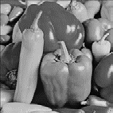
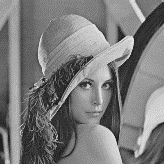
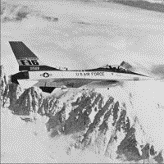
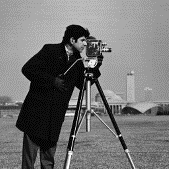
In this section, the performance analysis of this proposed scheme has been discussed. We have implemented our proposed technique using MATLAB 2014 and used some test images and two watermarks for embedding. The host image is taken (?? × ??) dimension. After applying IWT, dimension of LL band has become half of host image, i.e. (?? × ??). So, the size of watermarks is taken as one-fifth of the LL band that means (??/5 × ??/5) as the mask size is taken (5 × 5). Tent map is used in this technique to generate random numbers which are converted to binary numbers and then reshaped to a matrix of size (??/5 × ??/5). This output is used to scramble the two watermarks. For performing the XOR condition between tent map and sample image, it is important to take their dimension equal. If their dimensions don't match, XOR operation will not take place. After performing XOR between the Tent map and sample image, a scrambled image is generated. For performing the XOR condition between tent map image and sample image, it is important to take their dimension equal. If their dimensions don't match, XOR operation will not take place. MSE means mean square error that can be defined as cumulative squared error between the watermarked image and original image. PSNR is the measure of peak to peak error of image that is measured in terms of logarithmic decibel scale. With the increase of MSE of an image, PSNR value decreases. For M×N image, they can be calculated as following: Normalized correlation describes the congruity between two images. NC for any image is always 1 when no attack is added. When any attack is added to an image, this value decreases according to amount of noise. NC is calculated by:
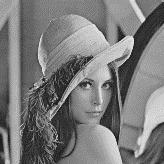
(a) (b) (c) (d) (e) (f) (g) (h) (i) (j) (k) (l)MSE = 1 MN ? ?[x(i, j) ? y(i, j)] 2 N j=1 M i=1(3)PSNR = 10log 10 ? max 2 MSE ? (4)NC = ? ? (W(x, y) × W ? (x, y)) N y=1 M x=1 ? ? W(x, y) 2 N y=1 M x=1 (5)W and W ? are original watermark and extracted watermark, respectively. ?? and N are rows and columns of the watermark image. For cropping (middle), extracted watermarks are very similar to the original image. For contrasting and histogram equalization, extracted watermarks are little bit distorted than other attacks. In Peppers image, watermark 2 seems to be better than watermark 1. Fig. 5.Shows the Lena image with attacks and its corresponding extracted watermarks. For contrasting and histogram equalization, both the watermarks are little distorted. In this figure, cropping (middle) gives better extracted watermarks again. Watermark 2 seems to be better than watermark 1 in this figure also. Same attacks are applied on jet-plane and cameraman images which are demonstrated in Fig. 6 and Fig. 7, respectively. Table 6 and Table 7 demonstrates the comparison of the scheme in terms of robustness test for Lena and Peppers images. NC values of watermark W2are used for comparison with schemes [10] and [11].
V.
7. Conclusion
In this paper, a dual level robust watermarking scheme has been introduced with the combination of integer wavelet transform, local binary pattern and tent map. IWT has made this method more robust and faster computability than any others transformation. Embedding procedure is conformed to odd and even pixel positions of host image with two watermarks. PSNR of the test images are varied according to change of scaling factor. For checking the rigidness of this method, image sharpening, histogram equalization, cropping, salt & pepper noise, gaussian noise and image contrasting are added to watermarked image. The output normalized correlation values show robustness of the method. We have also compared PSNR values with an existing method that exhibits remarkable results.


![Fig. 4 Shows the Peppers image with six different attacks and its corresponding extracted watermarks.For cropping (middle), extracted watermarks are very similar to the original image. For contrasting and histogram equalization, extracted watermarks are little bit distorted than other attacks. In Peppers image, watermark 2 seems to be better than watermark 1. Fig.5.Shows the Lena image with attacks and its corresponding extracted watermarks. For contrasting and histogram equalization, both the watermarks are little distorted. In this figure, cropping (middle) gives better extracted watermarks again. Watermark 2 seems to be better than watermark 1 in this figure also. Same attacks are applied on jet-plane and cameraman images which are demonstrated in Fig.6and Fig.7, respectively. Table6and Table7demonstrates the comparison of the scheme in terms of robustness test for Lena and Peppers images. NC values of watermark W2are used for comparison with schemes[10] and[11].](https://engineeringresearch.org/index.php/GJRE/article/download/1791/version/100956/4-Integer-Wavelet-Transform-based_html/20923/image-10.png)
| Image | PSNR(dB) | MSE | NC |
| Peppers | 46.74 | 1.2571 | 1 |
| Lena | 45.43 | 1.7902 | 1 |
| Jet plane | 44.74 | 2.1812 | 1 |
| Cameraman | 44.38 | 2.3945 | 1 |
| Scaling factor | Peppers | Lena | Jet plane | Cameraman |
| ?? = 1 | 46.74 | 45.43 44.74 | 44.38 | |
| ?? = 2 | 46.31 | 45.06 44.42 | 44.11 | |
| ?? = 3 | 45.87 | 44.68 44.07 | 43.83 | |
| ?? = 4 | 45.42 | 44.29 43.73 | 43.54 | |
| ?? = 5 | 44.97 | 43.90 43.37 | 43.23 | |
| ?? = 6 | 44.52 | 43.52 43.02 | 42.93 | |
| ?? = 7 | 44.09 | 43.14 42.69 | 42.62 | |
| Test | images, | watermarks, | scrambled |
| watermarks and watermarked images with corres- | |||
| ponding PSNR values are shown in Fig. 3. The PSNR, | |||
| MSE and NC values of four test images are | |||
| demonstrated in | |||
| Year 2018 |
| 37 |
| III Version I |
| Journal of Researches in Engineering ( ) Volume XVIII Issue F |
| Global |
| © 2018 Global Journals |
| Peppers | Lena | Jet plane | Cameraman | |||||
| Geometric attacks | ||||||||
| W1 | W2 | W1 | W2 | W1 | W2 | W1 | W2 | |
| Cropping (middle) | 0.9883 0.9978 0.9737 0.9931 0.9860 0.9968 0.9827 0.9971 | |||||||
| Cropping (upper right) | 0.9787 0.9767 0.9802 0.9800 0.9772 0.9978 0.9805 0.9808 | |||||||
| Cropping (bottom left) | 0.9937 0.9980 0.9928 0.9961 0.9943 0.9953 0.9938 0.9967 | |||||||
| Peppers | Lena | Jet plane Cameraman | ||||||
| Image processin attacks | ||||||||
| W1 | W2 | W1 | W2 | W1 | W2 | W1 | W2 | |
| Histogram equalization 0.9503 0.9498 0.9760 0.9768 0.9387 0.9409 0.9362 0.9356 | ||||||||
| Sharpening | 0.9957 0.9964 0.9916 0.9916 0.9943 0.9944 0.9877 0.9909 | |||||||
| Contrasting | 0.9655 0.9654 0.9168 0.9256 0.9681 0.9669 0.9452 0.9484 | |||||||
| Attacks Types | Scheme [10] | Proposed Scheme (W2) | |
| Lena | Peppers Lena Peppers | ||
| Gaussian noise (var=0.001) | 0.6454 | 0.6483 0.9965 0.9971 | |
| Cropping (middle) 0.7018 | 0.7674 0.9931 0.9978 | ||
| Contrasting | 0.6782 | 0.6457 0.9256 0.9654 | |
| Proposed | |
| Attacks Types | Scheme (W2) |
| Jet-plane Peppers Jet-plane Peppers | |
| Gaussian noise (var=0.001) | 0.7174 0.8689 0.9889 0.9971 |
| Cropping (middle) 0.8530 0.8844 0.9968 0.9978 | |
| Contrasting | 0.7463 0.7127 0.9944 0.9654 |