1. Introduction
luminum and its alloys are widely used materials for their excellent electrical and thermal conductivities in many applications and recently in the manufacture of integrated circuits [1,2]. So, the study of its corrosion inhibition is of great importance. The most widely used pickling acid is the hydrochloric acid, so this medium induced a great deal of research on aluminum [3][4][5]. A number of organic compounds are known to be applicable as corrosion inhibitors for aluminum in acidic environments. Such compounds typically contain nitrogen, oxygen or sulphur in a conjugated system and function via adsorption of the molecules on the metal surface, creating a barrier to corrodent attack [6][7][8][9]. The adsorption bond strength is dependent on the composition of metal, inhibitor structure and concentration as well as temperature [10]. Because of the fact that most of the chemical compounds that prevent the corrosion of metals and alloys are toxic, and thus pose threat both for human health and environment, their usage is limited. For this reason, several authors reported the use of natural products as corrosion inhibitors [11]; also, some various metals and alloys [12][13][14][15][16][17][18][19][20]. The use of environmental friendly pharmaceutical compound (expired Cidamex) as corrosion inhibitor for aluminum has not been reported before. Most of the pharmaceutical active substances are far more expensive than the organic inhibitors currently implemented. Therefore, our study was focused on the usage of expired drugs or unused drugs because of patient's non-compliance that contain in their composition active substances with inhibitory properties. This will solve two problems: a) Limitation of environmental pollution with pharmaceutically active compounds and b) reduction of the disposal costs of expired drugs.
2. II.
3. Experimental a) Materials and Solutions
The investigated compound (expired Cidamex) shown in Figure1, this drug was obtained from CID Giza Co. for Pharmaceuticals, Egypt., Analytical grade HCl (37%) was used as corrosive solution. Double distilled water used throughout experiments for the preparation of solutions. The weight experiments carried out using specimens of aluminum having dimensions (2 x 2 x 0.05 cm) and with composition more than 99.9%. The test pieces of aluminum samples were weight up to fourth decimal place using digital electronic balance. The aluminum specimens were polished by a series of emery paper (grade 320-1200 grit size) and then washed with double distilled water and acetone. After weighing, the specimens were totally suspended in beakers containing test solutions using glass hooks at temperature (25 and 45 0 C) in thermostat water bath. Each piece taken out of the test solution, rinsed with double distilled water, dried between two filter papers and weighed again. The difference in weights for an exposed period was taken as weight loss. The experiments carried out at various concentrations of Cidamex. Triplicate samples were used to check reproducibility of results.
4. ii. Hydrogen evolution and corrosion rates
The gas-volumetric technique provides a rapid and sensitive method of monitoring any perturbation by an inhibitor regarding gas evolution at the metalcorrodent inter phase. The corrosion of aluminum in acid solution is characterized by rapid effervescence resulting from hydrogen gas evolution. The corrosion rates of aluminum in the absence and presence of drug assessed by measuring the volume of H 2 gas evolved during the corrosion reaction. An ideal device for hydrogen evolution collection is easy to set up and operate. Figure 2 schematically illustrates a simple setup that used for the hydrogen evolution rate measurements in this study. This is actually a classic set-up for detection of the negative difference effect. The aluminium specimen put in a beaker containing the test solution. A funnel placed over the specimen, which ensured the collection of all the hydrogen from the specimen surface as well as from any undermined metal particles at the bottom of the beaker. A burette was mounted over the funnel, and was initially full of the test solution. The hydrogen collected by the funnel went into the burette and gradually displaced the test solution in the burette. In this way, the volume of the evolved hydrogen easily measured by reading the position of the test solution level in the burette.
iii. Potentiodynamic polarization measurements scan rate of 1 mVs -1 . The Tafel plots of the anodic and cathodic curves extrapolated to obtain the corrosion potential (E corr ) and corrosion current density (i corr .).
5. iv. Electrochemical impedance spectroscopy measurements
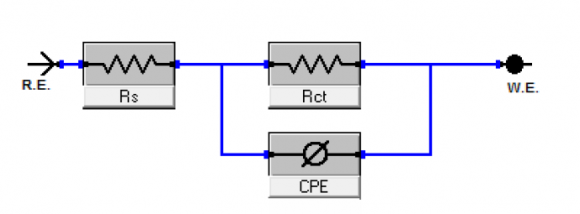
Electrochemical impedance spectroscopy (EIS) is a powerful technique for the characterization of electrochemical systems and mechanistic information. For this reason this technique is being applied to an increasing extent to understand corrosion process in solution, to study rate determination, inhibitor performance, coating performance and passive layer characteristics [21][22][23] experiments always repeated at least three times to check reproducibility of the results. Impedance diagrams are given in Nyquist representations. The electrical equivalent circuit Figure 3 was used to fit EIS data which consists from R s is the solution resistance, R ct is the charge transfer resistance and C dl is the double layer capacitance.
For potentiodynamic polarization studies of aluminum, a cylindrical rod embedded in araldite with an exposed surface area (1 cm 2 ) used and the experiments were carried out at 25 0 C. It was abraded with different grades of emery papers up to 1200 grit size. After that, the electrode washed with acetone, rinsed different times with distilled water and dried. The potentiodynamic measurements performed in a conventional three electrodes glass cell, which consists of aluminum as working electrode, platinum counter electrode and a saturated calomel electrode(SCE) as the reference electrode. All measurements carried out in aerated solution of 1 M HCl in the absence and presence of different concentrations of Cidamex. Potential curves were recorded by changing the electrode potential automatically from -0.8 to 0.5 V at a v. Electrochemical frequency modulation (EFM) measurements
The electrochemical frequency modulation has many features [24][25][26][27][28]. EFM is a non-destructive technique, rapid test, gives directly value of the corrosion current without a prior of knowledge of Tafel constants and has a great strength due to casually factors, which serve an internal check on the validity of the EFM measurement.
All electrochemical measurements were performed using Gamry Instrument (PCI 300/4) Potentiostat / Galvanostat /ZRA. This includes a Gamry framework system based on the ESA 400. Gamry applications include DC105 software for potentiodynamic polarization measurements, EIS300 software for EIS and EFM140 software for EFM measurements along with a computer for collecting data. Echem Analyst 6.03 software was used for plotting, graphing, and fitting data.
6. III.
7. Results
The weight loss recorded to the nearest 0.0001g was given by equation ( 1):
?w=w 1 -w 2(1)Where w 1 and w 2 are the weights of metal before and after exposure to the corrosive solution, respectively.
Corrosion rates calculated using the following expression [29]:
Corrosion rate = ?W AT mg cm -2 min -1(2)The percentage inhibition efficiency (% IE) of different concentration of expired Cidamex calculated from the corrosion rate values by using the following equation:
8. Global
Where ?w is the weight loss in mg, A is the area of the specimen in sq-cm and " T " is the exposure time in min.
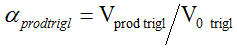
where w 2 and w 1 are the weight losses (mg) for aluminum sample in the presence and absence of the inhibitor and ? is the degree of surface coverage of the inhibitor. The % inhibition efficiency (% IE) and the degree of surface coverage (?) were tabulated .Figure 4 shows the plots of corrosion rate against different concentrations of drug. while Fig. 5 Table 1 : Data from weight loss of Al in 1 M HCl for various concentration of expired Cidamex after 1.5 h at 298 and 318 K
9. b) Adsorption isotherms
The adsorption of organic molecules provides information about the interaction between the adsorbed molecules themselves as well as their interaction with metal surface. When the fraction of the surface covered is determined as function of the concentration at The results show that the inhibitor influenced on reducing the dissolution of aluminum in 1M HCl solution at all concentrations used. The inhibition efficiency increased with increasing the concentrations while at the same time the corrosion rates significantly decreased.
298 K298 K 318 K ?W mg cm -2 ? % IE C.R., mg cm -2 h -1 ?W mg cm -2 ? %IE C.R., mg cm -2 h -1 Blank 1.950 ----- ---- 1.297 4.553 ---- ----3Flory-Huggins and Bockris-Swinkless [30][31][32][33]. The degree of surface coverage (?) for different concentrations of expired Cidamex in 1 M HCl was calculated from weight loss measurements Table 1 and was tested graphically for fitting a suitable adsorption isotherm. Figure 6 confirms that the inhibition processes due to adsorption of the inhibitor on the Al surface. This is because a straight line is obtained when log (C/?) is plotted against log C and the linear correlation coefficient of the fitted data is close to unity. This indicates that the adsorption of expired Cidamex molecules obeys the Langmuir adsorption isotherm [34] which expressed as:
C ? = 1 K + C (4)Where C is the expired Cidamex concentration and K ads is the equilibrium constant for the adsorption/ desorption process of the inhibitor molecules on the metal surface.
The relationship between the equilibrium constant, K ads , of adsorption and the free energy of adsorption, ?G 0 ads is given by the following expression [35].
K ads = 1/55.5 exp [?Î?"G o ads /RT](5)Values of free energy of adsorption calculated from equation ( 5) using K ads values obtained from Langmuir adsorption isotherm is presented in Table 2. The values are negative and less than -40 kJ mol -1 . This implies that the adsorption of the inhibitor on aluminum surface is spontaneous and confirms the physical adsorption isotherm mechanism [36]. c) Effect of temperature From our study, the protection efficiency decreases with an increase in temperature. This can be due to the decrease in the strength of adsorption process at higher temperature, suggesting that physical adsorption of the inhibitor on the sample surface. The apparent activation energies (E a ) for the corrosion, process in absence and presence of expired Cidamex can be evaluated from Arrhenius equation ( 6):
Log (C.R.) 2 /(C.R.) 1 = E a /2.303R( 1 ??1 - 1 ??2 )(6)Whereas estimates of the heats of adsorption (Q ads ) can be obtained from the trend of surface coverage with temperature as follows [37] Q ads = 2.303R [log (
??2 1???2 ) -log ( ??1 1???1 )] x ??1??2 ??2???1 ] (7)Table 3 : Calculated values of apparent activation energy (E * a ) and heat of adsorption (Q ads ) of expired Cidamex on aluminum in 1 M HCl at different temperatures
10. C
Increased activation energy, E a in inhibited solutions compared to the blank suggests that the expired Cidamex is physically adsorbed on the corroding metal surface while either unchanged or lower (E a ) in the presence of inhibitor suggest chemisorptions [38]. It seen in Table 3 that E a values increased with inhibitor concentrations, showing that the expired Cidamex retards corrosion at ordinary temperature and its corrosion retarding efficiency considerably diminished at higher temperature [39]. The low and negative Q ads values are indicative of less surface coverage with rise in temperature, supporting the earlier proposed mechanism of physisorption [40].
11. d) Hydrogen evolution method
The method of hydrogen evolution (via gasometric assembly) was determined as previously described elsewhere [41][42][43]. From Figure 7 and Table 4 when the concentration of expired Cidamex increases the hydrogen evolution decreases and inhibition efficiency increases, so expired Cidamex consider having an excellent ability to inhibit the corrosion of aluminum in the acid solution.
12. e) Potentiodynamic polarization measurements
Potentiodynamic polarization curves for aluminum in 1M HCl solution in the absence and presence of different concentration of expired Cidamex at 25 0 C are shown in Figure 8 the polarization parameters such as E corr , i corr; anodic and cathodic Tafel slopes (? a, ? c )are summarized in Table 5. Both anodic and cathodic Tafel slopes were slightly changed on increasing the expired Cidamex concentration. This means that there is no change of the mechanism of the inhibition in presence and absence of expired Cidamex drug and this drug affects both cathodic and anodic reactions, i.e. it is mixed-type inhibitor [44]. The E corr values show that the expired Cidamex behaves as mixed type, with small variations in the E corr values of the blank specimens. The degree of surface coverage (?) and inhibition efficiency (% IE) were calculated using equation ( 8):
% IE = ? x 100 = [1-(i/ i°)] x 100 (8)where i° and i are the current densities in the absence and presence of the extract, respectively.
Z CPE = Y 0 -1 (j ? ) -n (9) %IE = [(R ct -R 0 ct )/R ct ] ×100(11)Where R o ct and R ct are the charge transfer resistance in the absence and presence of inhibitor, respectively, the results listed in Table 6.By increasing the inhibitor concentration, the R ct values increase and the calculated C dl values decrease, as it can be seen from Table 6, the C dl values tend to decrease with the increase of the concentration of inhibitor in 1 M HCl. The decrease in the C dl , which can result from a decrease in local dielectric constant and/or an increase in the thickness of the electrical double layer, suggests that inhibitor molecules function by adsorption at the metal/solution interface. Deviations from the ideal semicircle are generally attributed to the frequency dispersion as well as in homogeneities, roughness of metal surface and mass transport process [51][52][53]. The resistances between the metal and outer Helmholtz plane (OHP) must be equal to the R ct . The adsorption of expired Cidamex molecules on the metal surface decreases its electrical capacity because they displace the water molecules and other ions originally adsorbed on the metal surface. This modification results in an increase of charge-transfer resistance. The R ct values increased with inhibitors concentrations may suggest the formation of a protective layer on the aluminum surface. This layer makes a barrier for mass and charge-
13. C
EIS was employed to investigate the effect of concentration on inhibitive behavior of inhibitor in 1 M HCl at 25 0 C. The EIS results in form of Nyquist and Bode phase plots have been presented in Figure 9a,b. The impedance spectra consist of a large capacitive loop at high frequency followed by a small inductive one at low frequency. The values of polarization resistance and double layer capacitance were recorded in Table 6. Generally, the small inductive loop at low frequency (LF) observed for aluminum in HCl [45][46][47][48]. The diameter of Nyquist plots (R p ) increases on increasing the inhibitor concentration. These results suggest the inhibition behavior of inhibitor. The Nyquist plots analyzed in terms of the equivalent circuit composed with classic parallel capacitor and resistor Figure 2 [49]. The impedance of a CPE is described by the equation 9:
transfer. The Bode plot, Figure 9b Shows resistive region at high frequencies and capacitive region at intermediate frequencies but do not show a clear resistive region (horizontal line and a phase angle = 0) at low frequencies. These plots show two overlapped phase maxima at intermediate and low frequencies. According to act circuit theory, an impedance plot obtained for a given electrochemical system can be correlated to one or more equivalent circuits.
where Y 0 is the magnitude of the constant phase element ( CPE), j is an imaginary number, ? is the angular frequency at which the imaginary component of the impedance reaches its maximum values and n is the deviation parameter of the CPE: -1 ? n ? 1.
The values of the interfacial capacitance C dl can be calculated from CPE parameter values Y 0 and n using equation 10 [50]:
C dl = (2?f max R ct ) ?1 (10)Where f max is the frequency value, at which the imaginary component (Z") of impedance is maximum. The degree of surface coverage (?) and the inhibition efficiency (% IE) were calculated from the charge transfer resistance (R ct ) values using the following equation ( 11
14. g) Electrochemical frequency modulation (EFM) measurements
The EFM like EIS, it is a small signal ac technique. Unlike EIS, however, two sine waves (at different frequencies) are applied to the cell simultaneously. Because current is a non-linear function of potential excitation. The current response contains not only the input frequencies, but also contains frequency components, which are the sum, difference, and multiples of the two input frequencies. The two frequencies may not choose at random. They must both be small, integer multiples of a base frequency that determines the length of the experiment. The calculated electrochemical parameters at different concentrations of drug at 25°C (i corr , ? a , ? c , CF-2, CF-3 and % IE EFM ) are given in Table 7. Figure 10 represents the EFM intermodulation spectra (spectra of current response as a function of frequency) of aluminum in 1 M HCl devoid of and containing 300 ppm of Cidamex. The inhibition efficiency, % IE FM and the degree of surface coverage (?) of drug was calculated using equation (12): % IE = ? x 100 = [1-(i corr /i°c orr )] x 100 (12) Where i°c orr and i corr are corrosion current density in the absence and presence of black tea extract. The causality factors calculated from the frequency spectrum of the current response. If the causality factors differ significantly from the theoretical values of 2.0 and approximately the predicted values of 2.0 and 3.0, there is a causal relationship between the perturbation signal and the response signal. Then the data are assumed to be reliable [54] From the results of Table 7, it can be seen that by increasing the concentration of extract to the medium the corrosion current density (i corr ) decreases, indicating that the extract inhibits the 1 M HCl corrosion of carbon steel through adsorption. The calculated inhibition efficiency % IE EFM enhances with increasing drug concentration.
15. h) Mechanism of inhibition
The above observations and analysis show that the inhibitor is adsorbed on Al. Four mechanisms have been suggested for the adsorption of the inhibitor at the metal-solution interface [55]. These are: i) electrostatic attraction between charged molecules and charged metal ii) interaction of unshared electron pairs in the molecule with the metal iii) interaction of ? -electrons with the metal and iv) a combination of all the above. The adsorption of investigated drug compound can be attributed to the presence of polar unit having atoms of nitrogen, sulphur and oxygen and aromatic/heterocyclic rings. Therefore, the possible reaction centers are unshared electron pair of hetero-atoms and ?-electrons of aromatic ring [56]. As discussed above the thermodynamic and kinetic parameters, the adsorption is mainly electrostatic. Physical adsorption requires presence of both electrically charged surface of the metal and charged species in the bulk of the solution. In the acid solution, the drug could be protonated due to the interaction between O atom and H + . The value of pH zch , which is defined as the threshold pH at a point of zero charge, is equal to 9.1 for aluminum [57]. So aluminum surface is positively charge due to accumulation of Al????OH 2 + species in acidic solution [58]. The acid anions (Cl -) adsorb electrostatically on the positively charged, giving rise in for a net negative charge on the metal surface; and the organic cations are physically attracted to the anions layer which is formed on the metal surface, forming electrostatic protective layer on aluminum. IV.
16. Conclusions
The results obtained show that expired Cidamex drug is a good corrosion inhibitor for aluminum under acidic conditions. The adsorption of expired Cidamex drug on aluminum surface obeys Langmuir adsorption isotherm. The adsorption process is spontaneous. The adsorption of the expired Cidamex drug onto the aluminum characterized by the decrease in: (a) Weight loss of aluminum (b) hydrogen evolution (c) the cathodic and anodic current densities observed in the potentiodynamic polarization curves carried out in the presence of drug, (d) the double-layer capacitance computed from electrochemical impedance spectroscopy experiments and (e) the current obtained from electrochemical frequency modulation (EFM). The negative values of ?G 0 ads show the spontaneity of the adsorption. Inhibition efficiency increases with increase in expired Cidamex concentration and decreases with rise in temperature. From this study, it was concluded that these unused drugs can be used as save corrosion inhibitors for water cooling systems, oil pipelines, degreasing solutions, deicing solutions for aircrafts, paints and coatings, inhibitors for concrete fuels and lubricants, metal processing solutions [59]

![Figure 1 : Structure of expired Cidamex Drug [N-(5sulfamoyl-1,3,4-thiadiazol-2-yl)] acetamide b) Methods and Techniques i. Weight loss methodThe weight experiments carried out using specimens of aluminum having dimensions (2 x 2 x 0.05 cm) and with composition more than 99.9%. The test pieces of aluminum samples were weight up to fourth decimal place using digital electronic balance. The aluminum specimens were polished by a series of emery paper (grade 320-1200 grit size) and then washed with double distilled water and acetone. After weighing, the specimens were totally suspended in](https://engineeringresearch.org/index.php/GJRE/article/download/1468/version/100693/2-Expired-Cidamex-Drug_html/15056/image-3.png)
| Figure 6 : Langmuir adsorption isotherm for expired Cidamex adsorption on aluminum in 1 M HCl at two different |
| temperatures after 1.5h immersion |
| Conc., | Volume of hydrogen gas | % IE |
| ppm | evolved (ml) | |
| blank | 1.50 | ------ |
| 50 | 0.50 | 66.6 |
| 100 | 0.30 | 80.0 |
| 150 | 0.20 | 86.0 |
| 200 | 0.10 | 93.3 |
| 250 | 0.05 | 96.7 |
| 300 | 0.02 | 98.7 |
| Conc., ppm | -E corr , mV vs SCE | i corr , mA cm -2 | ? a , V dec -1 | ? c , V dec -1 | ? | % IE |
| Year 2016 | ||||||||
| 14 | ||||||||
| ( ) Volume XVI Issue I Version I | ||||||||
| Global Journal of Researches in Engineering | Conc., ppm Blank 50 100 150 200 250 300 | R ct , m? cm -2 607.3 853.5 902.1 1002.0 1023.0 2645.0 3827.0 | R s 2704 2017 3138 4167 2690 2436 2783 | Y° x 10 6 ?? -1 s n 195.30 118.40 210.90 240.60 67.29 85.19 108.90 | n 1.059 1.095 1.085 1.010 1.123 1.061 1.014 | C dl, x10 4 ?F cm -2 3.20 2.63 4.13 2.61 1.93 1.38 1.21 | ? 0.148 0.194 0.274 0.290 0.730 0.810 | % IE 14.8 19.4 27.4 29.0 73.0 81.0 |
| BLANK | |||||||||
| 1E-5 | |||||||||
| 1E-6 | |||||||||
| logi(A/cm 2 ) | 1E-7 | ||||||||
| 1E-8 | |||||||||
| -0.2 0.0 | 0.2 | 0.4 | 0.6 | 0.8 | 1.0 | 1.2 | 1.4 | 1.6 | |
| Fr.(HZ) | |||||||||